Follow-up should not depend on who remembers
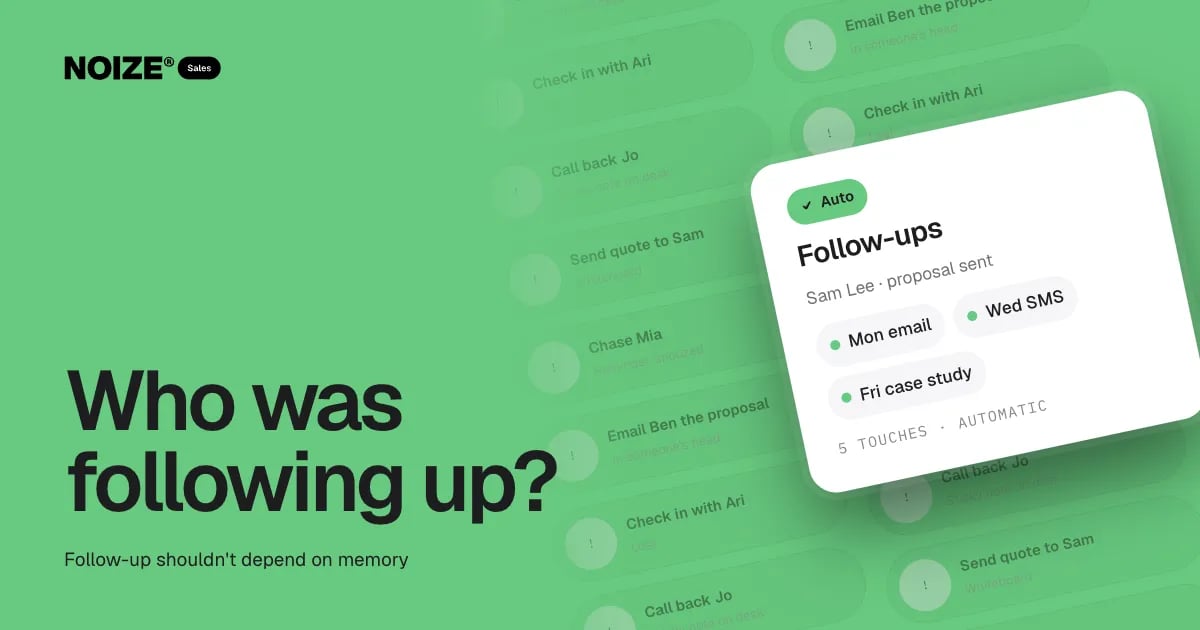
"Call back Jo" is on a sticky note on someone's monitor. "Send quote to Sam" is on the office whiteboard. "Chase Mia" was a phone reminder, snoozed twice. "Email Ben the proposal" lives in someone's head. "Check in with Ari" has been lost entirely.
Follow-up depends on who remembers. In most small businesses, that is the whole follow-up system. It works when things are quiet. When the business gets busy, which is exactly when there are more deals to follow up, it collapses.
The short version
- Most deals need several touches before they close, but most businesses stop after one or two.
- A follow-up system sets out what happens after each enquiry and proposal, on which day, through which channel, and records it in a CRM so nothing depends on memory.
- Automate the reminders and routine messages, keep the important conversations personal and stop only when you have a clear answer.
Why follow-up fails
01It relies on memory
When follow-up lives on sticky notes and in people's heads, it happens when someone remembers and has time.
02People feel pushy
Many owners worry about bothering customers, so they wait. Customers often read silence as lack of interest.
03There is no plan
Without a defined sequence, each follow-up is improvised, and it is easier to put off.
04Busy periods take over
When the team is flat out delivering work, follow-up is the first thing dropped, which creates quiet periods later.
What a follow-up system looks like
01A defined sequence
For example: a call the day after the proposal, an email two days later with a relevant example, a short message the following week, a final check-in a week after that. Adjust to your sales cycle.
02Every touch adds value
Each follow-up should help: answer a likely question, share a relevant case study, clarify the next step or offer a short call.
03Tasks in the CRM
Each step creates a task for a named person on a set date. Overdue tasks are visible.
04Automation for the routine
Confirmation emails, reminder messages and scheduled check-ins can send automatically. People handle calls and personal replies.
05A clear end
Stop when the customer says yes, no or not now, and record the outcome. "Not now" leads move into a longer nurture sequence.
> I've taken thousands of sales calls. The single habit that made the biggest difference was calling every proposal within forty-eight hours, without exception. Customers weren't annoyed. Most were relieved someone made the next step easy.
“Things really got moving beyond our expectations.”
Follow-up that doesn't feel pushy
Being helpful is the opposite of pushy. Ask whether they had questions about the proposal. Send a short example of similar work. Offer to walk them through the options. Give them an easy way to say no. Customers appreciate businesses that make decisions easier.
An illustrative example
Picture a design studio that sends proposals and waits. Many go quiet. A follow-up system adds a call the next day, a relevant case study three days later and a final check-in after a week, all triggered from the CRM. Within a few months, more proposals convert, and the studio also learns why some prospects say no, which improves future proposals.
Mistakes to avoid
- Don't send the same generic "just checking in" message every time. Each touch should add something.
- Don't automate everything. Personal calls at key moments matter.
- Don't follow up forever without a plan. Define when a lead moves to long-term nurture.
Where Sales and Digital work together
NOIZE Sales designs the follow-up rhythm around your sales cycle. NOIZE Digital builds it into the CRM and connects email and SMS, so the system runs without relying on anyone's memory. See sales.noize.com.au.
Questions to ask about your follow-up
- How many open proposals have had no contact in a week?
- What happens after a proposal is sent, step by step?
- Who is responsible for each follow-up?
- Where are follow-up tasks recorded?
- What do we say in each follow-up that adds value?
- When do we stop, and what happens to "not now" leads?
If the answers are vague, follow-up is depending on memory.
What good looks like
Every proposal triggers a set sequence of calls, emails and messages. Tasks appear in the CRM for a named owner on the right day. Routine messages send automatically. Each touch adds something useful: an answer, an example, an easy next step. Deals end with a clear yes, no or not now, and the reason is recorded. Not-now leads move into a longer nurture sequence instead of disappearing.
Why follow-up builds trust
Customers often read prompt, helpful follow-up as a preview of the service they will receive. A business that stays in touch, answers questions and makes decisions easy is showing how it will treat them after they sign.
Where to start this week
List every open proposal and the date of the last contact with each customer. Anything older than a week without follow-up is at risk. Contact them, then write down the sequence you just used. That is the first draft of your system.
How Sales connects to the rest of NOIZE
The value grows when this department works alongside the rest of the group. NOIZE Digital builds the CRM, integrations and automation that keep follow-up running. NOIZE Creative makes proposals and pitch decks look like the brand. NOIZE Talent provides the people to run the process once it exists. NOIZE Legal helps keep terms of trade current, with an appropriately qualified professional where required. And when deals grow larger, NOIZE Accounting helps make sure the pricing still works. Sales stops being one person's job and becomes a system the whole business supports. NOIZE Marketing brings the leads and adjusts campaigns based on which ones close.
Related reading
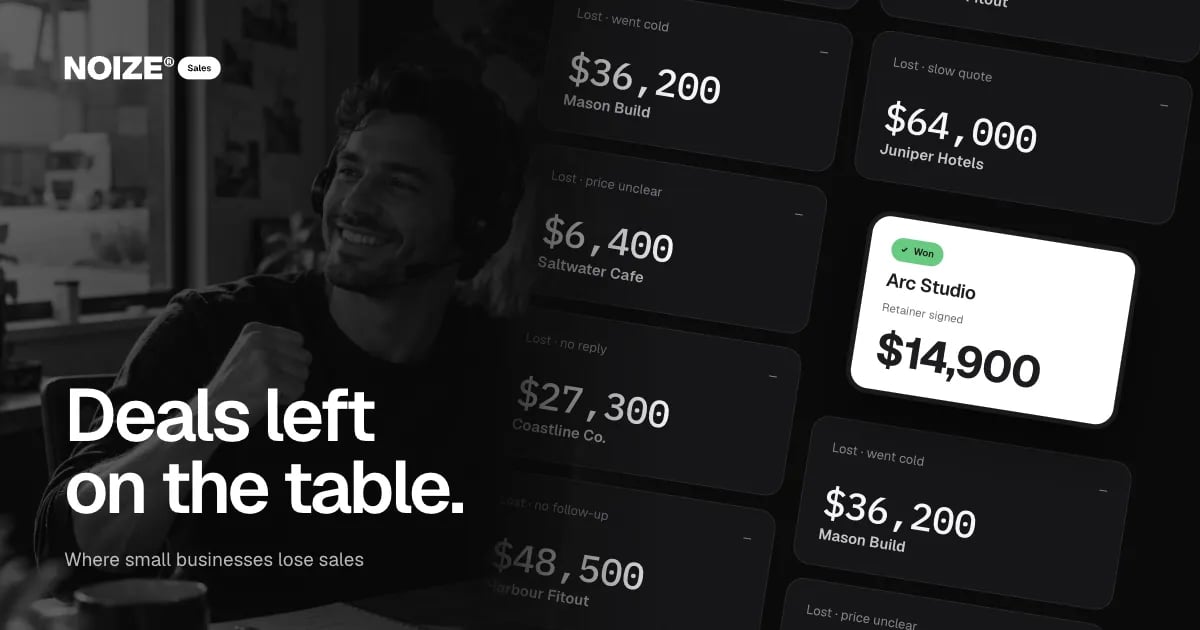
- Stop leaving deals on the table: where small businesses lose sales
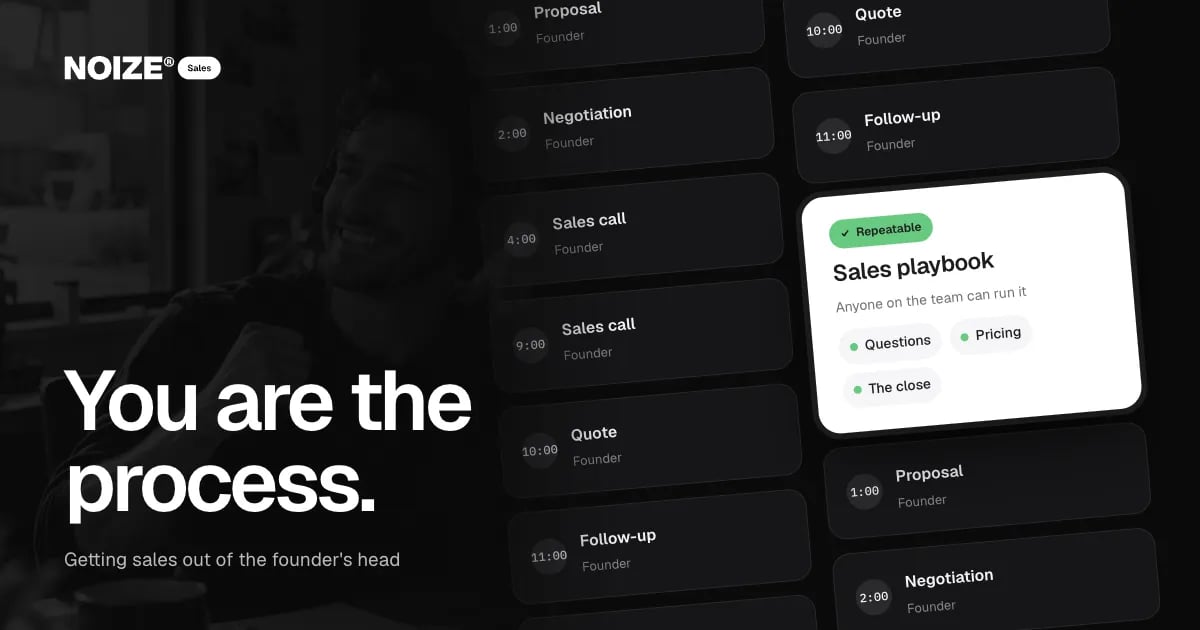
- Getting sales out of the founder's head
Common questions
How many follow-ups does it take to close a deal?
It varies, but many deals need several touches. Plan a sequence rather than relying on one or two attempts.
How soon should I follow up after sending a proposal?
Within a day or two, while the proposal is fresh.
Can sales follow-up be automated?
Reminders, confirmations and some messages can be automated. Important conversations should stay personal.
How do I follow up without being annoying?
Make every contact useful and give the customer an easy way to say no or not now.
What is lead nurturing?
Staying in helpful contact with prospects who aren't ready yet, until they are.
What CRM should I use for follow-up?
One that suits your team and process. We recommend based on how you sell.
What if the customer says no?
Record the reason. It improves future proposals and may reveal a later opportunity.
Who should do the follow-up?
A named owner for each deal, with clear tasks and dates in the CRM.
How do we know where deals are lost?
Track each deal's stage in a CRM and review lost deals regularly, recording the reason each time.
Should the owner still be involved in sales?
Usually, yes, in coaching, key meetings and the largest deals, rather than in every step.
Your first strategy conversation is on us.
Have a chatThe brand for business.