Getting sales out of the founder's head
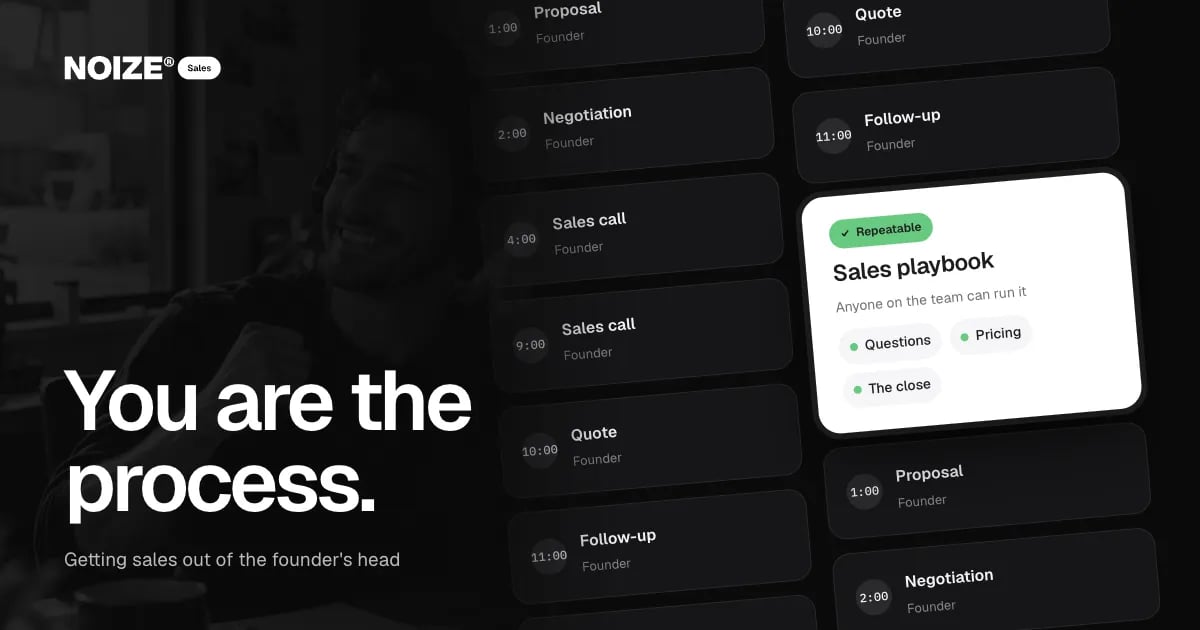
Nine o'clock, sales call: the founder. Ten o'clock, quote: the founder. Eleven, follow-up: the founder. One o'clock, proposal: the founder. Two, negotiation: the founder. Four, another sales call: the founder.
In many growing businesses, the founder is the sales process. They know the customers, the pricing logic, the objections and how to close. It works brilliantly, until the business needs to grow beyond one person's calendar. Then sales becomes the ceiling.
The short version
- Founder-led sales works because the founder knows things nobody has written down.
- Getting sales out of the founder's head means documenting what works: who to target, how to qualify, the questions to ask, how to handle objections, how to price and how to close.
- That becomes a playbook, supported by a CRM and templates, that others can run.
- The founder moves from doing every deal to coaching and closing the biggest ones.
Why founder-led sales stalls
01There are only so many hours
Every call, quote and follow-up needs the founder. Growth is capped by their availability.
02Knowledge isn't shared
The founder knows instinctively which leads are worth chasing and how to answer objections. New salespeople have to guess.
03Hires struggle
Salespeople join without a process to follow, underperform and leave. The founder concludes "nobody sells like me".
04The business depends on one person
If the founder is away, sales slows. Buyers and investors see that dependency as risk.
What goes into a sales playbook
01Ideal customer
Who the business sells to best, and the signs a lead is a good fit.
02Qualification questions
The few questions that reveal need, budget, timing and decision-makers.
03The sales stages
What happens at each stage, from first contact to signed deal, and what moves a deal forward.
04Discovery and pitch
The questions to ask, the story to tell and the proof to share.
05Objection handling
The common objections and the answers that work, in the founder's own words.
06Pricing logic
How prices are set, what can be negotiated and what can't.
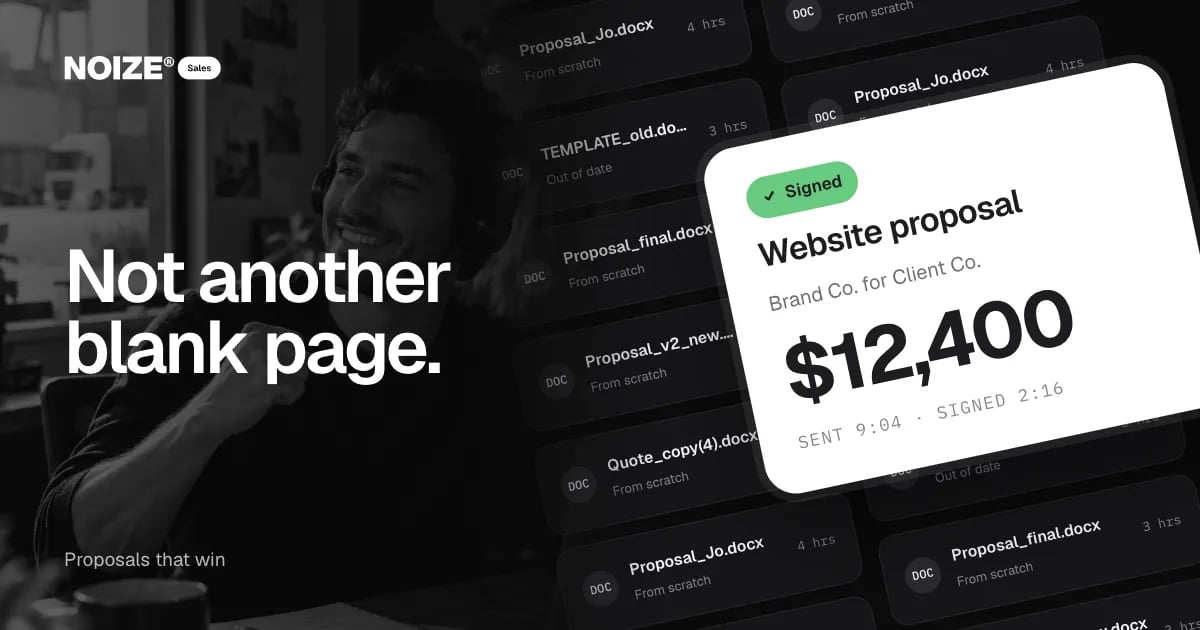
07Proposals and close
Templates for proposals and the steps to close.
08Follow-up rhythm
What happens after every stage, and when.
> I've taken thousands of sales calls, and when I first tried to hand sales over, I realised how much I'd never written down. The pricing exceptions, the questions I asked without thinking, the objections I'd heard a hundred times. Recording my calls and turning them into a playbook was uncomfortable and transformative.
“Couldn't recommend these guys enough.”
How to capture what the founder knows
Record a few sales calls with permission and transcribe them. Write down the questions the founder always asks and the objections they hear most. Note how they decide whether a lead is worth pursuing. Review the last ten won deals for patterns. Then turn it into a short, practical document with templates and scripts.
Moving the founder's role
The goal isn't to remove the founder from sales entirely. It is to move them to where they add most value: coaching the team, joining important meetings and closing the largest deals. Everything else runs through the playbook.
An illustrative example
Imagine a software founder closing every deal personally. Growth has plateaued. Recording calls reveals a consistent discovery process and three common objections. These become a playbook with qualification questions, demo structure, objection responses and proposal templates. A fractional sales lead runs the process, the founder joins final calls for larger deals and pipeline grows beyond what one person could handle.
Mistakes to avoid
- Don't write a playbook nobody uses. Keep it short, practical and built into the CRM.
- Don't hire before the process exists. New salespeople need a system to walk into.
And don't expect an exact copy of the founder. The playbook should make good results repeatable, not clone a personality.
Where Sales and Talent work together
NOIZE Sales builds the playbook, CRM stages and templates. NOIZE Talent then provides the people to run it, fractional, part-time or full-time. See sales.noize.com.au and talent.noize.com.au.
Questions to ask the founder
- Which questions do you always ask on a first call?
- How do you decide whether a lead is worth chasing?
- What are the three objections you hear most, and how do you answer them?
- How do you set prices, and where do you negotiate?
- What do you do between proposal and close?
Recording the answers is the fastest way to start a playbook.
What good looks like
The sales process is written down in a short, practical playbook. The CRM reflects the stages. Proposal templates and objection answers are ready to use. A salesperson, fractional lead or outsourced team runs the process day to day. The founder coaches weekly, joins key meetings and closes the largest deals. Sales keeps growing even when the founder is away.
The value beyond growth
A business whose sales don't depend on its founder is easier to scale, easier to step back from and more valuable to a buyer. Documenting the sales process is one of the most practical steps an owner can take towards all three.
Where to start this week
Record your next three sales calls, with permission. Listen back and write down every question you asked and every objection you answered. That list is the first page of your playbook.
How Sales connects to the rest of NOIZE
Here is how the other departments support this work. NOIZE Creative makes proposals and pitch decks look like the brand. NOIZE Talent provides the people to run the process once it exists. NOIZE Legal helps keep terms of trade current, with an appropriately qualified professional where required. And when deals grow larger, NOIZE Accounting helps make sure the pricing still works. Sales stops being one person's job and becomes a system the whole business supports. NOIZE Marketing brings the leads and adjusts campaigns based on which ones close. NOIZE Digital builds the CRM, integrations and automation that keep follow-up running.
Related reading
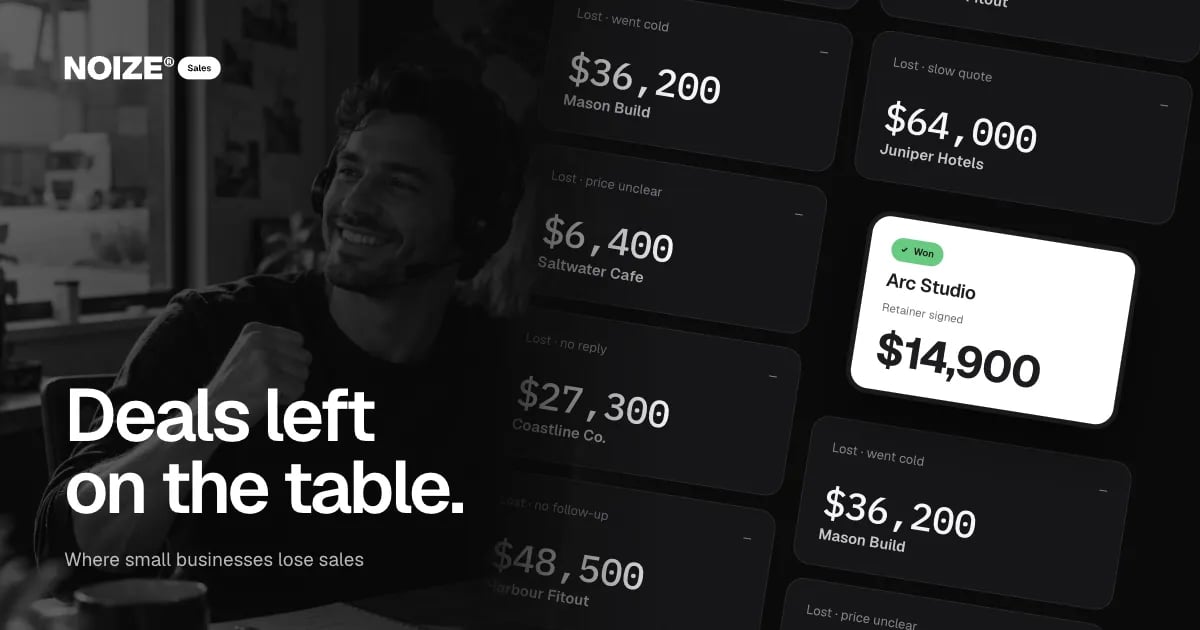
- Stop leaving deals on the table: where small businesses lose sales
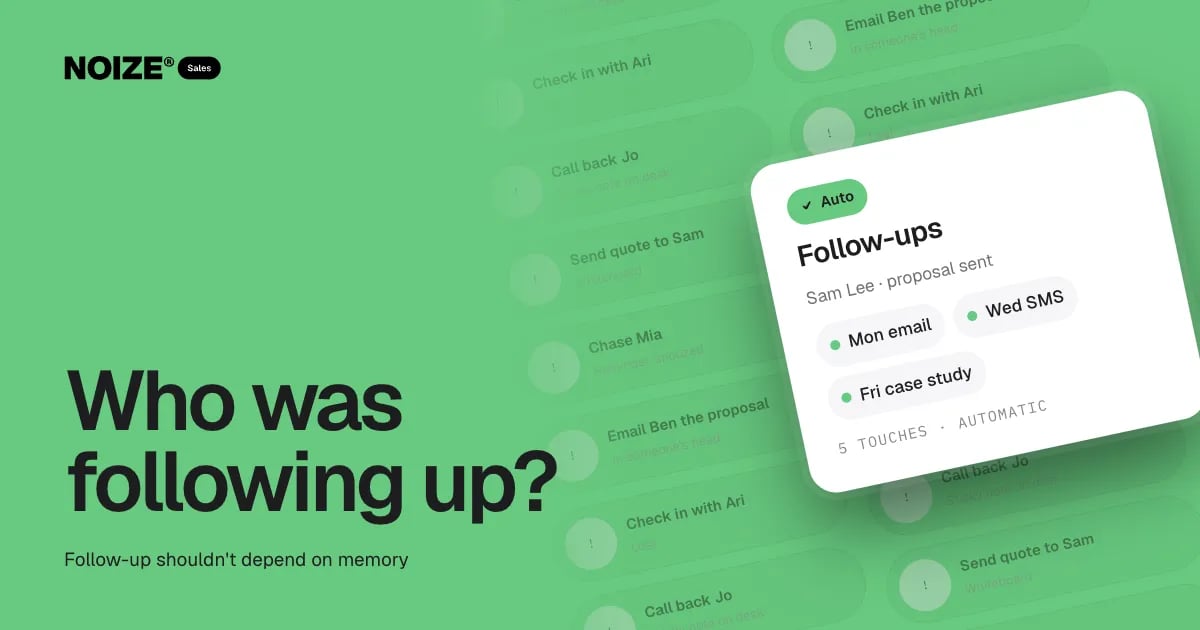
- Follow-up should not depend on who remembers
Common questions
What is founder-led sales?
When the business owner personally handles most or all sales activity.
What is a sales playbook?
A documented guide to how the business sells, covering customers, qualification, stages, objections, pricing, proposals and follow-up.
How long does it take to build a sales playbook?
A useful first version can be built in weeks and improved over time.
When should a founder hire a salesperson?
Once there is a documented process and enough qualified leads for someone to work.
Will a salesperson sell as well as the founder?
With a good playbook and coaching, they can achieve strong, consistent results.
Does reducing founder dependency increase business value?
Usually. Buyers value businesses whose sales don't depend on one person.
Can NOIZE provide a sales lead?
Yes. NOIZE Talent can provide fractional or outsourced sales capability.
Where does the CRM fit?
It holds the stages, tasks and templates so the playbook is followed every day.
Should the owner still be involved in sales?
Usually, yes, in coaching, key meetings and the largest deals, rather than in every step.
Your first strategy conversation is on us.
Have a chatThe brand for business.