Stop leaving deals on the table: where small businesses lose sales
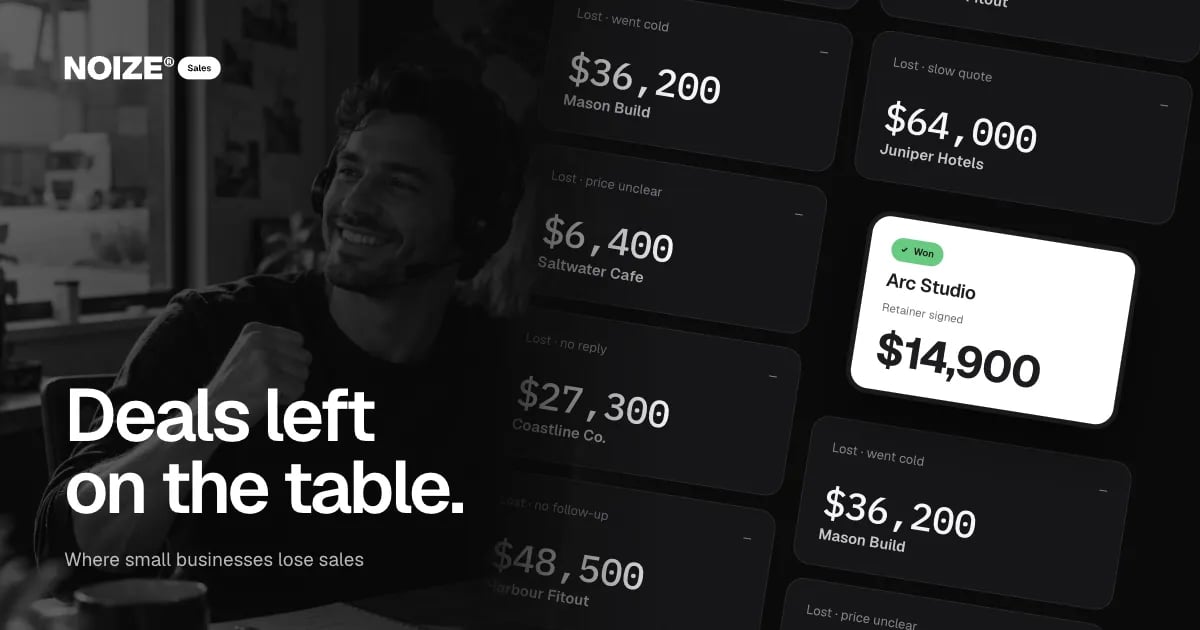
Harbour Fitout: lost, no follow-up. Juniper Hotels: lost, quote took too long. Mason Build: lost, went cold after the proposal. Saltwater Cafe: lost, price wasn't clear. Coastline Co.: lost, never replied to the second email.
Look at most businesses' lost deals and a pattern appears. Very few were lost to a better competitor or a lower price. Most were lost to the business's own process: slow responses, unclear proposals and follow-up that stopped too soon. Plenty of leads, inconsistent conversion.
The short version
- Most small businesses lose sales at four predictable points: slow first response, weak qualification, vague or slow proposals and missing follow-up.
- Find your leaks by reviewing your last ten lost deals.
- Fixing those leaks is usually far cheaper than buying more leads, and the improvement shows up quickly.
- NOIZE Sales reviews the pipeline, proposals and follow-up and shows you exactly where deals are lost.
The four leaks
01Slow first response
Enquiries wait hours or days for a reply. By then the customer has spoken to a competitor who answered first. Speed signals reliability before you have said anything about your service.
02Weak qualification
Time is spent equally on every enquiry, so good opportunities get the same attention as poor fits. The best prospects wait while the team chases the wrong ones.
03Vague or slow proposals
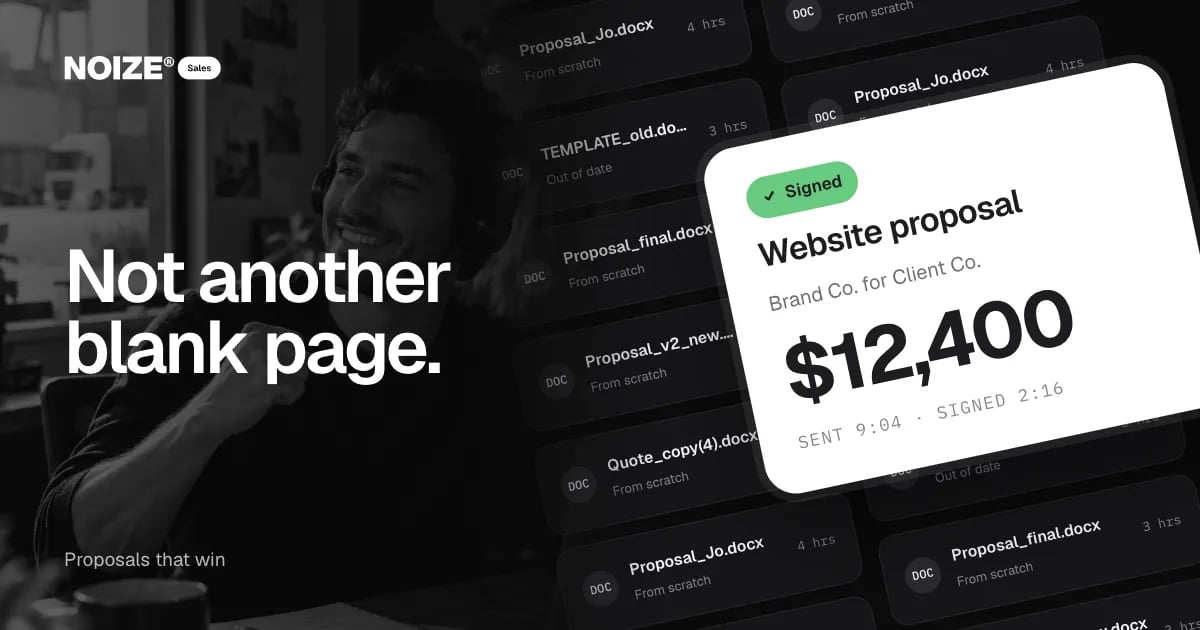
Quotes take days to assemble, arrive as a price without context, or fail to show that the business understood the customer's problem. The customer can't easily say yes.
04Missing follow-up
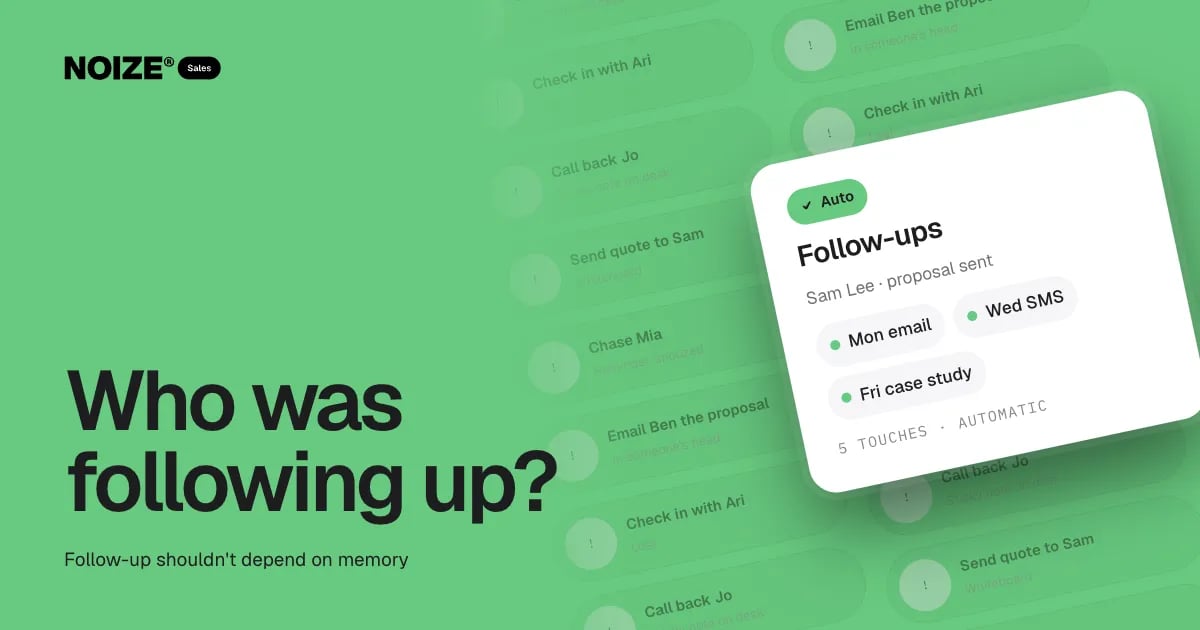
A proposal is sent and the business waits. The customer is busy, distracted or comparing options, and without a follow-up the deal drifts away.
How to find your leaks
- Was it the first enquiry?
- A call?
- A quote?
- A follow-up?
Take your last ten lost deals. For each one, write down the last thing that happened before it went quiet. Then note how long each step took.
Patterns appear quickly. Many businesses discover that most lost deals stopped at the same stage. That stage is where to start.
Do the same with your last ten wins. What did they have in common? Often it is speed, a clear proposal and a follow-up call. That is your winning pattern, and the goal is to make it happen every time.
> I've taken thousands of sales calls, and the deals I remember losing weren't lost on price. They were lost because I waited for the customer to call me back. When I started following up properly, my close rate changed more than any pitch improvement ever did.
Fixing each leak
- Response: route enquiries to a named person automatically, send an instant acknowledgement and set a target to respond within the hour.
- Qualification: agree a short set of questions that identify good-fit opportunities, and prioritise those leads.
- Proposals: use templates that restate the customer's problem, outline the plan, show clear pricing and ask for one next step. Send them the same day where possible.
- Follow-up: set a rhythm of calls, emails and messages after every proposal, with reminders in the CRM so nothing depends on memory.
“They have been nothing short of amazing and have played a major part in our success!”
Why fixing leaks beats buying leads
If a business converts one in five qualified leads, doubling the marketing budget might double the leads and the sales, at double the cost. Improving conversion to two in five doubles sales without spending more on marketing. Every future lead is worth more too.
An illustrative example
Imagine a commercial fit-out business winning about one in six quotes. A review shows quotes take a week to prepare and almost no follow-up happens. Templated proposals cut preparation to a day, a follow-up sequence starts automatically after each quote and the owner calls every proposal within three days. Within a quarter, the win rate improves meaningfully on the same volume of enquiries.
Mistakes to avoid
- Don't assume price is the reason without evidence. Ask lost prospects why they chose someone else.
- Don't fix everything at once. Start with the leak that loses the most deals.
And don't rely on willpower. Systems, templates and reminders make good habits automatic.
Questions to ask about your sales process
- How long does it take us to reply to a new enquiry?
- Who decides which leads get priority?
- How long does a quote take to go out?
- What happens after a proposal is sent, and who owns it?
- Why did we lose our last five deals, in the customer's words?
The answers usually point straight at the biggest leak.
What good looks like
Every enquiry gets a reply within the hour. Leads are qualified with a short set of questions. Proposals go out the same or next day, from templates. A follow-up rhythm runs after every proposal, tracked in the CRM. Lost deals are recorded with a reason. The win rate is measured monthly, and it is rising.
Where to start this week
Pull your last ten lost deals and your last ten wins. Note where each stopped or closed and how long each step took. The difference between the two lists is your sales plan. See sales.noize.com.au.
How Sales connects to the rest of NOIZE
Sales sits in the middle of the business, so it depends on the departments around it. NOIZE Marketing brings the leads and adjusts campaigns based on which ones close. NOIZE Digital builds the CRM, integrations and automation that keep follow-up running. NOIZE Creative makes proposals and pitch decks look like the brand. NOIZE Talent provides the people to run the process once it exists. NOIZE Legal helps keep terms of trade current, with an appropriately qualified professional where required. And when deals grow larger, NOIZE Accounting helps make sure the pricing still works. Sales stops being one person's job and becomes a system the whole business supports.
Related reading
Common questions
Why am I losing sales to competitors?
Often because of slow responses, unclear proposals or missing follow-up rather than price. Reviewing lost deals usually reveals the real cause.
How can I improve my sales conversion rate?
Respond faster, qualify better, send clearer proposals sooner and follow up on a set rhythm.
What is a good conversion rate for leads?
It varies by industry and lead source. Track your own rate and focus on improving it over time.
How many times should I follow up?
Several times over a few weeks, with useful contact each time, until you get a clear answer.
Do I need a CRM to fix my sales process?
A CRM makes follow-up and tracking far easier, especially when more than one person sells.
What does a NOIZE sales review include?
A look at your pipeline, proposals and follow-up, and a prioritised list of where deals are lost and how to fix it.
How quickly will I see results?
Improvements to response time and follow-up can show results within weeks.
Can you provide salespeople?
Yes. NOIZE Talent can provide sales capability once the process is in place.
What is a qualified lead?
A lead that matches your best-fit customer and has a genuine need, budget and timeframe, as agreed between Marketing and Sales.
Your first strategy conversation is on us.
Have a chatThe brand for business.